
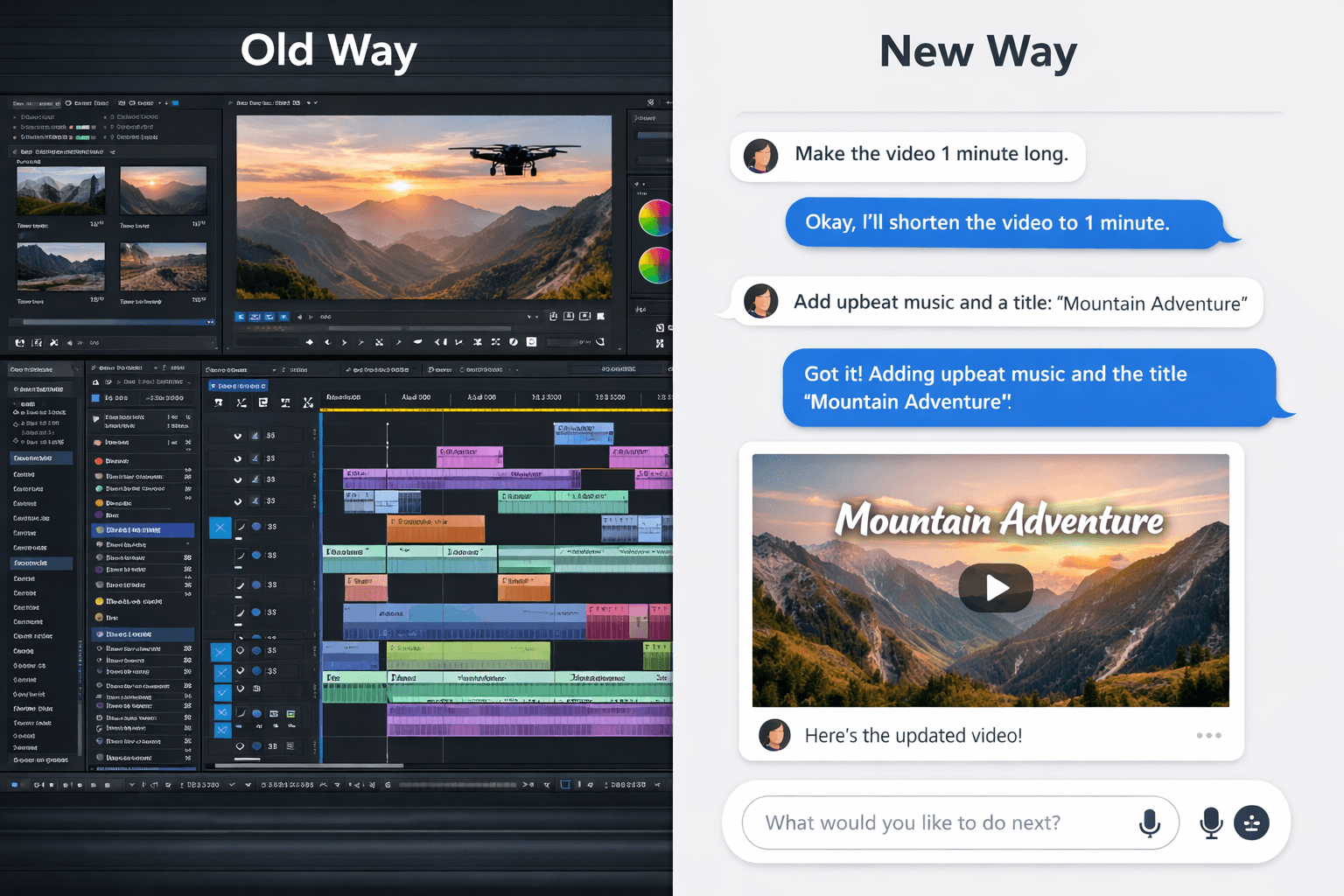
ChatGPT changed everything. In coding it was Claude. But Cursor brought it all together for programmers. The same thing is happening to media creation

Remember when coding meant memorizing endless command-line arguments, wrestling with cryptic syntax, and spending hours debugging something that could be explained in plain English? Then tools like ChatGPT and Claude arrived and changed everything. Suddenly, developers could simply talk to their code, describing what they wanted in natural language while AI handled the technical complexity. The transformation wasn't just incremental—it was revolutionary. Then, building on the foundations of ChatGPT and Claude, a software tool called Cursor arrived on the scene as an 'IDE' - an Integrated Development Environment - which provided all the tools and environment for programmers to leverage all these AI tools as a full workflow solution.
Now, that same revolution is coming to media creation. And if you're a content creator, marketing professional, or media studio drowning in footage and struggling with complex editing workflows, you need to pay attention.
The Cursor Moment: When Natural Language Met Complex Tools
To understand where media creation is heading, we first need to understand what made Cursor so transformative for software development.
Before Cursor, coding was a command-based discipline. You needed to know specific syntax, remember function names, and translate your intentions into the precise language that computers understood. IDEs offered autocomplete and syntax highlighting, but fundamentally, you were still speaking to the machine in its language.
Cursor flipped this dynamic. Instead of developers adapting to the tool, the tool adapted to the developer. Want to refactor a function? Just describe what you want. Need to debug a tricky issue? Ask in plain English. Building a complex feature? Explain your goal conversationally, and watch AI generate, iterate, and refine the code with you.
The result? Developers became exponentially more productive. Junior developers could tackle senior-level work. Senior developers could focus on architecture and creative problem-solving rather than syntax memorization. The barrier between intention and execution collapsed.
Ready to bring this productivity revolution to your media workflow?
This is exactly what's happening to media creation right now.
Media Creation's Command-Line Problem
If you work in media—whether you're a growing YouTube creator, a corporate marketing team, or an enterprise studio—you're likely stuck in the command-based era of content creation. Learn more about the content crisis teams face today
Your tools are powerful, sure. Adobe Premiere Pro, DaVinci Resolve, Final Cut Pro—these are phenomenal pieces of software. But they operate on the same fundamental principle as pre-Cursor coding: you must learn their language. You navigate complex menus, memorize keyboard shortcuts, and translate your creative vision into a series of precise technical commands.
The problems compound as your content library grows:
The Discovery Problem: You have thousands of hours of footage scattered across S3 buckets or Box folders. Finding that perfect B-roll shot from three months ago? Good luck. You're scrolling through folders, scrubbing through timelines, relying on file names that made sense when you uploaded them but are now cryptic mysteries.
The Editing Bottleneck: You need to make a quick edit—trim a section, adjust color, add captions—but it requires opening your editing software, importing assets, making adjustments, rendering, and exporting. What should take 30 seconds becomes 30 minutes. For corporate teams without formal video training, it's even worse. You know what you want to change; you just don't know which menu it's hiding in.
The Workflow Chaos: You need approval from stakeholders. You need QC checks for brand consistency. You need to ensure sensitive content is flagged. Your current solution? Email chains, Slack threads, and shared drives that quickly devolve into version control nightmares. "Final_v3_ACTUALLY_FINAL_revised.mp4" sound familiar?
The Scale Ceiling: Maybe you started as a solo creator, editing on your desktop. But you've grown. You have a team now, or you need to produce more content, or your projects have gotten more complex. Your desktop solution can't scale. Enterprise tools could work, but they're prohibitively expensive and require extensive training.
These aren't small inconveniences—they're fundamental barriers to creativity and productivity.
Enter the Conversational Revolution
Just as Cursor brought natural language to coding, a new generation of AI-native tools is bringing conversational interfaces to media creation. And Flo is leading this charge. See why context beats traditional folder organization
You open your media library and simply type: "Show me all footage from the Q3 marketing campaign featuring our CEO."
Instantly, AI surfaces exactly what you need—no folder navigation, no filename archaeology, no scrubbing through hours of footage. Your content discovers itself through natural language search. This is why context beats traditional file-based workflows.
You find the clip you want, but it needs adjustments. Instead of opening a separate editing tool, you chat with your content right there: "Trim the first 10 seconds, boost the audio by 3dB, and add captions."
Seconds later, it's done. Production-grade edits, no rendering wait, no software launch required.
Experience instant AI-powered video editing without the wait.
You're ready to share, but first you need approval. You assign a review task to your colleague with: "Check this for brand consistency and get Sarah's sign-off."
The system handles the workflow. Sarah gets notified, reviews inline, leaves feedback in context, and approves. No email threads. No downloaded files. No confusion about which version everyone's looking at.
Finally, you're ready to publish: "Upload to YouTube with our standard tags and description."
Done. The entire workflow—from discovery to delivery—happened through natural conversation with your content. enabling 10-minute highlight reels that used to take hours.
This is "Cursor for Media." This is the future. This is Flo.
Why Natural Language Changes Everything
The shift from command-based to conversational interfaces isn't just about convenience—it fundamentally transforms who can create, what they can create, and how fast they can create it. Discover how AI enables 10-minute highlight reels
Democratization: Just as Cursor made coding accessible to people who previously couldn't navigate complex development environments, conversational media tools democratize professional-grade content creation. Corporate marketing teams who never attended film school can now produce studio-quality content. The barrier isn't technical knowledge anymore—it's creative vision.
Speed: When you can describe what you want instead of hunting through menus and remembering shortcuts, everything accelerates. That 30-minute edit becomes 30 seconds. Finding footage drops from hours to moments. The iteration cycle compresses dramatically.
Focus: Command-based tools force you to think about how to do something. Conversational tools let you focus on what you want to accomplish. Your cognitive energy shifts from technical execution to creative strategy. You're directing, not button-pushing.
Collaboration: Natural language is universal. When your entire team—regardless of technical skill—can interact with your media library and tools through conversation, collaboration becomes seamless. Feedback is clearer. Approvals are faster. Everyone speaks the same language: their own.
The AI-Native Advantage
Here's what makes this revolution different from just adding AI features to existing tools: true transformation requires building AI-native from the ground up.
Legacy editing software is adding AI features—auto-captions, smart color correction, content-aware fill. These are helpful, but they're still bolted onto command-based interfaces. You still need to know where to find them, how to configure them, and how to integrate them into your workflow.
Flo is different. It's AI-native, designed from the foundation around conversational interaction. Natural language isn't a feature—it's the interface. AI isn't a tool you activate—it's the fabric of how you work.
Semantic search that understands intent, not just keywords
In-context editing through chat, not separate applications
Intelligent workflow automation that adapts to your needs
30+ AI-powered transformations accessible through simple description
Human-in-the-loop approvals that ensure quality without bottlenecks
Semantic search that understands intent, not just keywords
In-context editing through chat, not separate applications
Intelligent workflow automation that adapts to your needs
30+ AI-powered transformations accessible through simple description
Human-in-the-loop approvals that ensure quality without bottlenecks
And because it's cloud-native with integrations to S3 and Box, your content lives where you need it, accessible to your entire team, with the power of major studio tools at a fraction of the cost.
Who This Is For (And Why It Matters Now)
The conversational media revolution isn't just for tech-forward early adopters. It's for:
Growing creators who've outgrown desktop editing but can't afford (or don't want) the complexity of enterprise tools. You need organization, workflow, and power that scales with your ambitions.
Corporate marketing teams sitting on mountains of content with no good way to find, edit, and deploy it. You're not trained video editors—you're marketers who need to move fast and produce quality content for campaigns, ads, and social.
Media studios that recognize traditional tools can't keep pace with modern demands. You need QC at scale, brand consistency checks, workflow automation, and AI assistance that empowers your team rather than replacing them.
The common thread? Everyone is producing more content than ever, with higher quality expectations, tighter deadlines, and leaner teams. Command-based tools optimized for individual expert editors can't meet this moment. Conversational, AI-native platforms can.
The Future Is Conversational
Cursor didn't just make coding easier—it changed what coding could be and who could do it. The same transformation is now happening in media creation.
Join the conversational content revolution.
Command-based interfaces were necessary when computers couldn't understand human language. But we're past that limitation now. Continuing to force creators into tool-centric workflows when we have the technology for conversation-centric workflows isn't just inefficient—it's obsolete.
The future of content creation is telling your tools what you want and having them figure out how to deliver it. It's discovering content through intent, not folder structures. It's editing through description, not memorized shortcuts. It's collaborating through natural language, not technical jargon.
The future of content creation is conversational.
The future of content creation is Cursor for Media.
Ready to experience the conversational revolution in media creation? Discover how Flo can transform your workflow from command-based complexity to natural language simplicity.
‹ The Death of File-Based Workflows: Why Context Beats Folders
Continue Reading
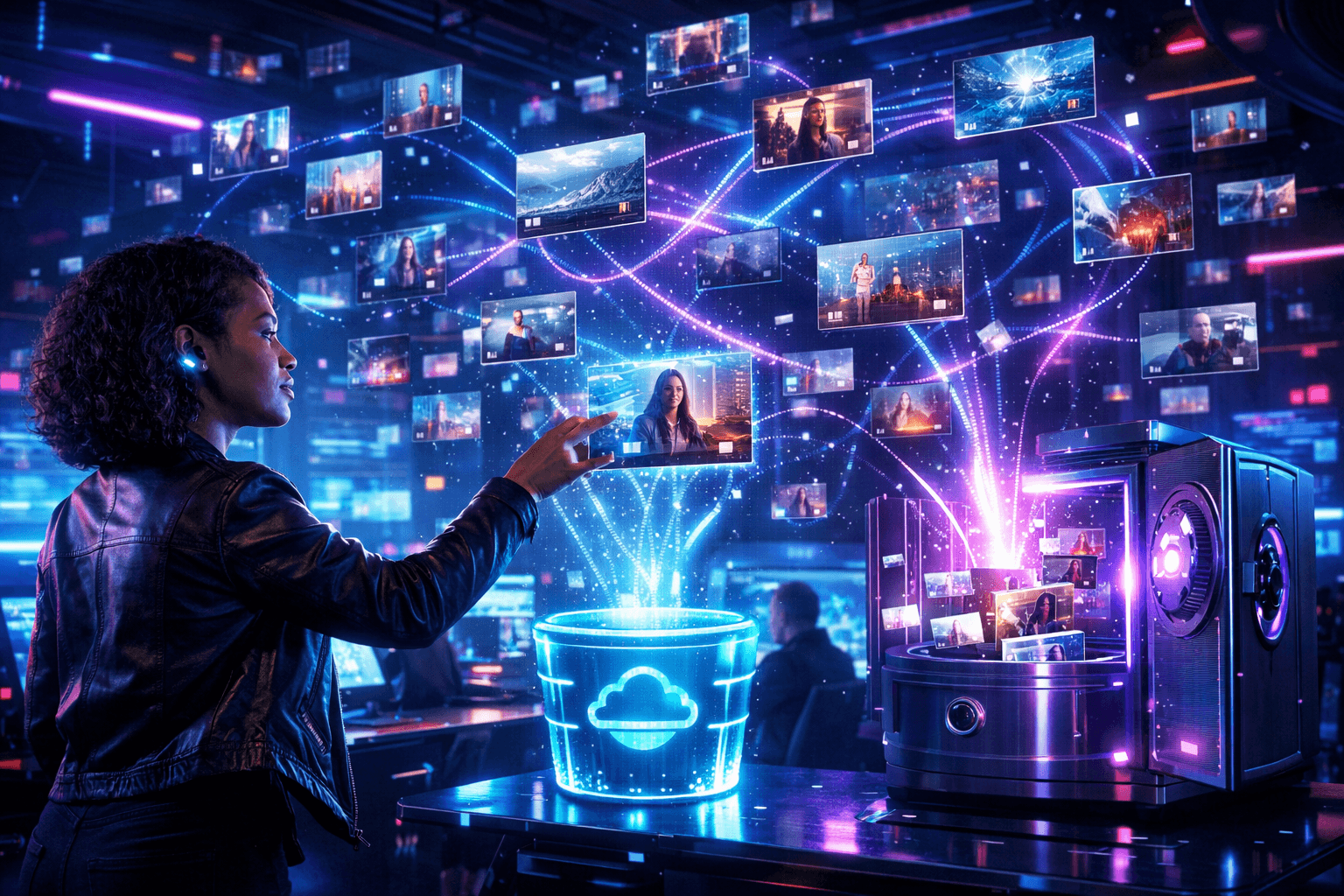
Corporate Marketing's Secret Weapon: Your Untapped S3 Archive
This article provides a brief overview of the key ideas, insights, and takeaways covered in the post. Whether you're here to explore trends.
Corporate Marketing's Secret Weapon: Your Untapped S3 Archive
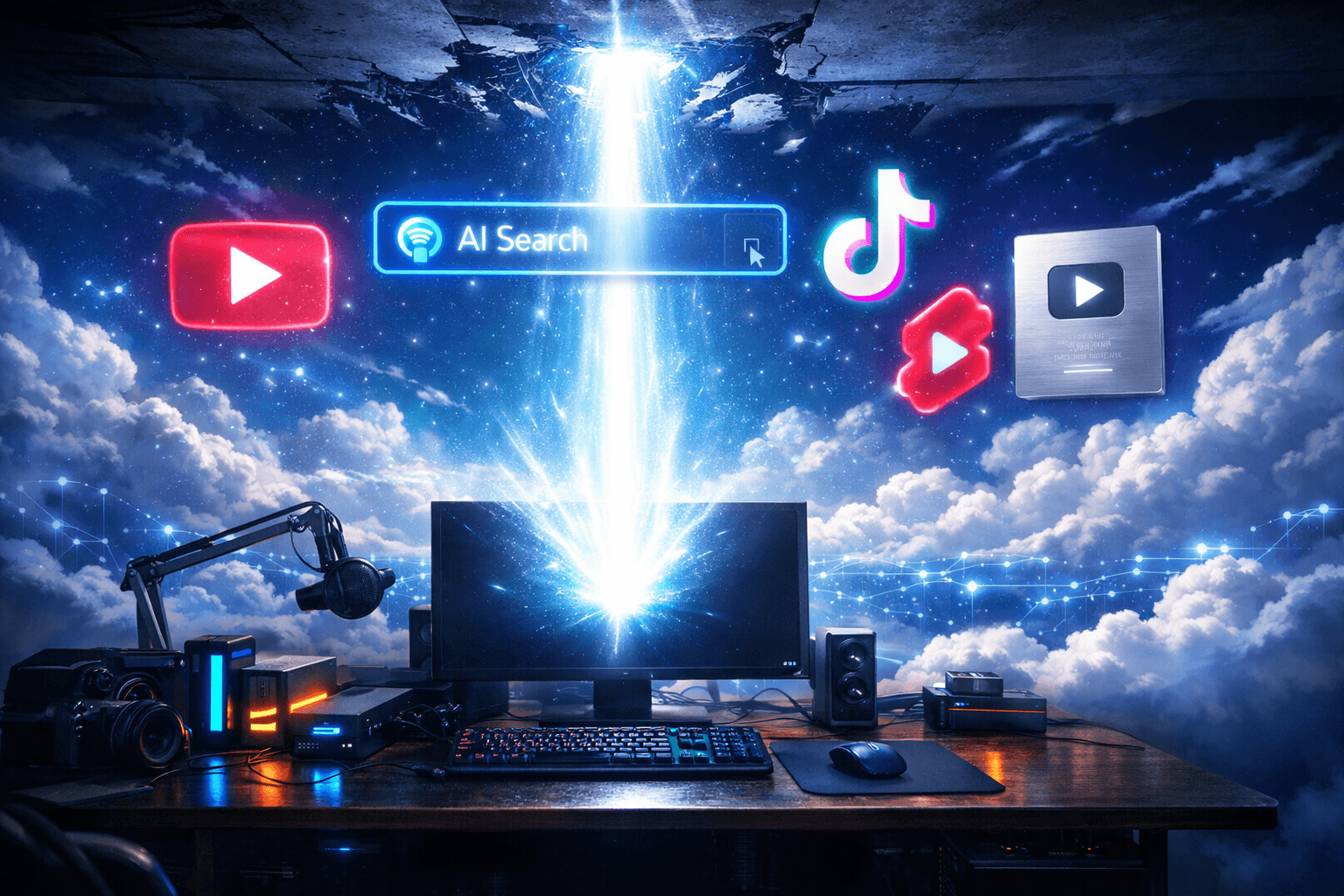
From Desktop to Cloud: How YouTube Creators Scale Beyond 100K Subscribers
From Desktop to Cloud: How YouTube Creators Scale Beyond 100K Subscribers
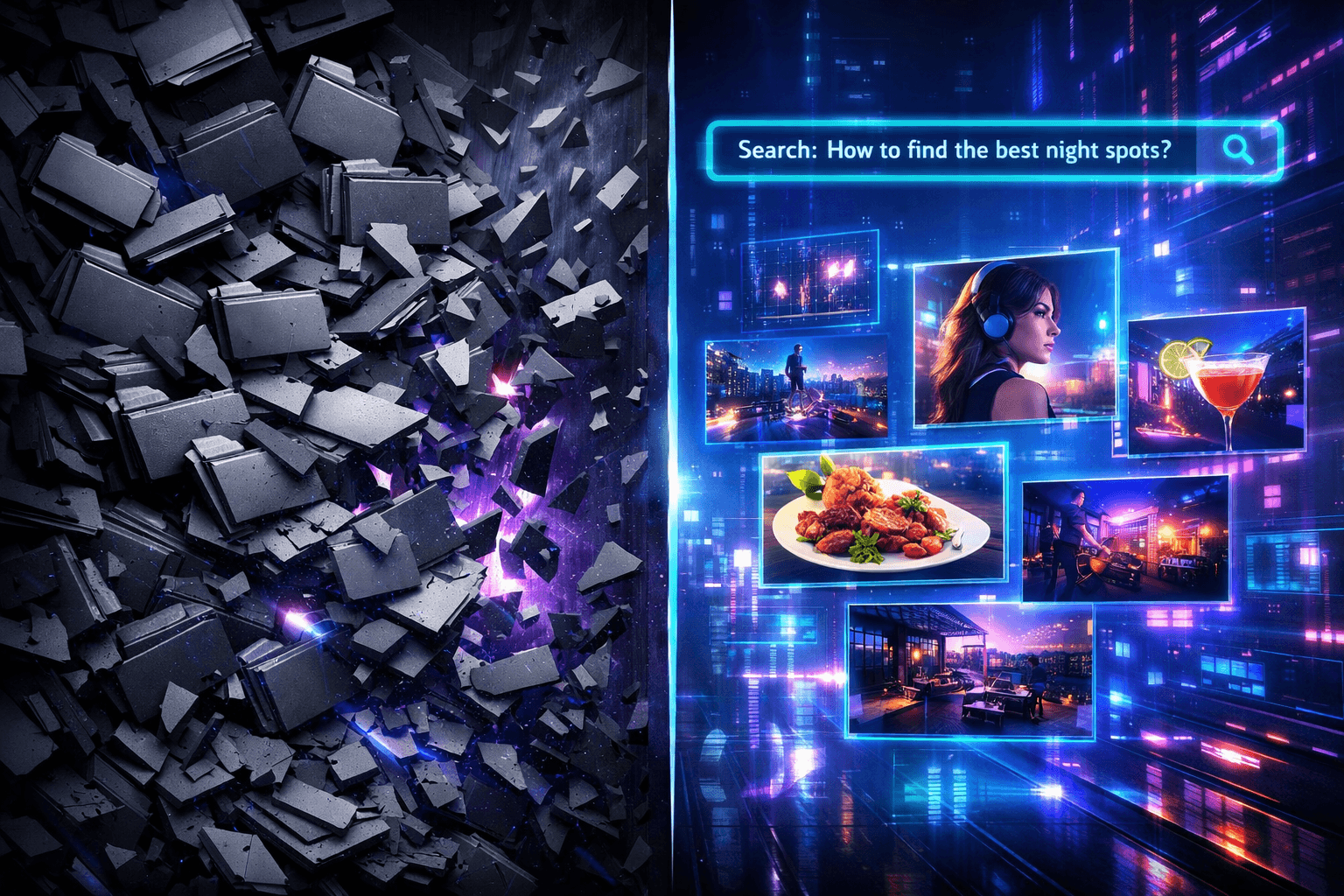
The Death of File-Based Workflows: Why Context Beats Folders
The Death of File-Based Workflows: Why Context Beats Folders
Corporate Marketing's Secret Weapon: Your Untapped S3 Archive
From Desktop to Cloud: How YouTube Creators Scale Beyond 100K Subscribers