
Plugging in is not an architecture
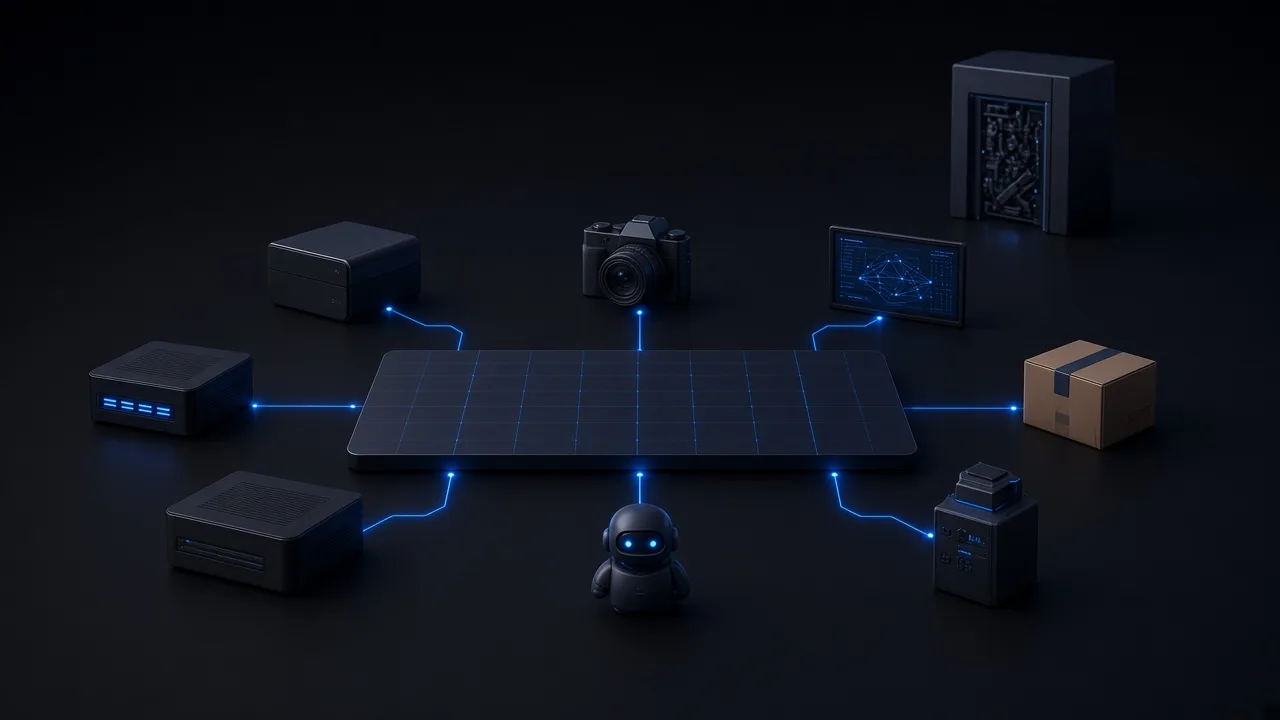
I was one of 76 media technology leaders who answered the DPP Media Tech CEO Survey 2026, which you can download from the DPP. Most of the report is about AI, and about how quickly our customers are deciding to build their own software. The answer I’ve reread most sits in the chapter on partnerships, under a question about the large vendor platforms that are turning into unified operating layers for the industry. Another CEO wrote: “None of the platforms have a truly open, modern software architecture.”
I think that sentence is right, and that it matters more than its place in the report suggests, because of what the rest of the industry has decided to do about those platforms.
The plan most suppliers share
Asked about their go-to-market posture as these platforms develop, 77% of the CEOs said they actively seek to integrate their tools into major vendor platforms. Another 15% prefer to keep standalone products, and 8% treat partner alliances as secondary to their own ecosystem.
For any single supplier, plugging in is the sensible move. Customers buy best-of-breed, the platforms are where large media operations already spend, and a certified integration gets a small company into rooms it would struggle to reach on its own. I’d give a point-tool company the same advice today. The trouble starts when three quarters of an industry makes the same rational choice and begins to describe the sum of it as the industry’s operating layer.
What open and modern mean here
The survey has a long thread on open standards. 61% of respondents think customers are settling on a pragmatic mix, with open standards for basic connectivity and proprietary systems for advanced workflows. That debate is mostly about transport and interchange, and I’m going to leave it alone.
The sentence I quoted is about something else. By open I mean that another system, including a customer’s own agent, can run the work without anyone living inside the vendor’s interface. Every action the software can take is something an outside caller can ask it to take, and the state of a job is something an outside caller can read. By modern I mean software that the people running it can change and extend at the pace their business moves, without waiting for the vendor’s next release. Neither definition requires the code to be open source.
Customers are already asking for it
Suppliers know which way the requests are going. Asked how customers and their AI agents will interact with their technology over the next two years, 24% of the CEOs said they are prioritizing machine-readable endpoints so that customer-owned agents can fully orchestrate their software. Another 47% are adding MCP servers or similar AI integration points next to their existing UI and APIs. Only 4% expect customers to keep working mainly inside the vendor’s own interface.
The comments are blunter than the chart. One CEO said their most successful deployments are the ones where they are “100% invisible.” Another described customers who want to “attach it to other services with their own veneer of a UI which calls our tools and sits on top of everything we all do which is underneath.”
That describes a customer who wants to sit at the center of their own operation and call vendors as capabilities, which is hard to deliver if your product was designed to be the place where the work happens.
Why integration cannot produce it
A platform that other tools integrate into has a center, and the center sets the terms. Partners get the connectors, events and permissions the platform chooses to expose, on the platform’s roadmap. That can be generous, and some of these programs are. It is still access granted by a destination, and a customer’s agent reaches each partner’s tool through the same gate.
Adding partners makes the ecosystem larger without changing what the center is. If the core was built to be operated through its own UI, with workflow state held inside it, then a hundred certified integrations give you a hundred more things that core coordinates on its own terms. The customer who wants their own interface or their own agent on top still goes through the platform, and the platform still decides what that agent can see and do.
Openness in the sense I mean has to be designed into the core: what can be addressed from outside, what state is exposed, which parts can be swapped without the vendor’s involvement. It is a property of the software, not of the partner agreement, so integrations added at the edges can’t retrofit it.
The build question points the same way
The other big finding in the report is that 79% of the CEOs expect media companies to move toward building their own software, now that AI-assisted coding has made it cheap to start. The warnings that follow are some of the best writing in the report. One CEO worries that self-build “can become fossilised and ever harder to unpick than some of their current systems.” Another asks who will keep investing “in a space where everything is a snowflake.”
I agree with both of them. A broadcaster that vibe-codes its own media supply chain will own a maintenance bill it didn’t price in. But the remedy most of the room offers is a return to the platforms, and the platforms are what these customers have been building their way around. Few of them want to own software for its own sake; they build because the products they buy won’t let them run the work their way.
Between a closed hub and a homegrown snowflake there is a third kind of software: a shared layer built from the start to be called and extended by the customer and their agents, and maintained by a vendor so that no customer has to fossilize their own copy. I think the industry needs that layer, and I don’t think it arrives through more integrations into the platforms we already have.
That is the kind of software we are building at Flomenco. Flo is an Agentic Media Platform, an operating layer across the storage, systems, and production tools a team already runs. If you took part in the survey, or you run a media operation that has reached the limit of what plugging in can do, I’d like to hear where you landed.
Bring us a workflow that crosses your stack
Show us a job that touches your storage, systems, and production tools, and we'll walk through how Flo would connect them.
Book a demo